How to Repair Electric Water Heater
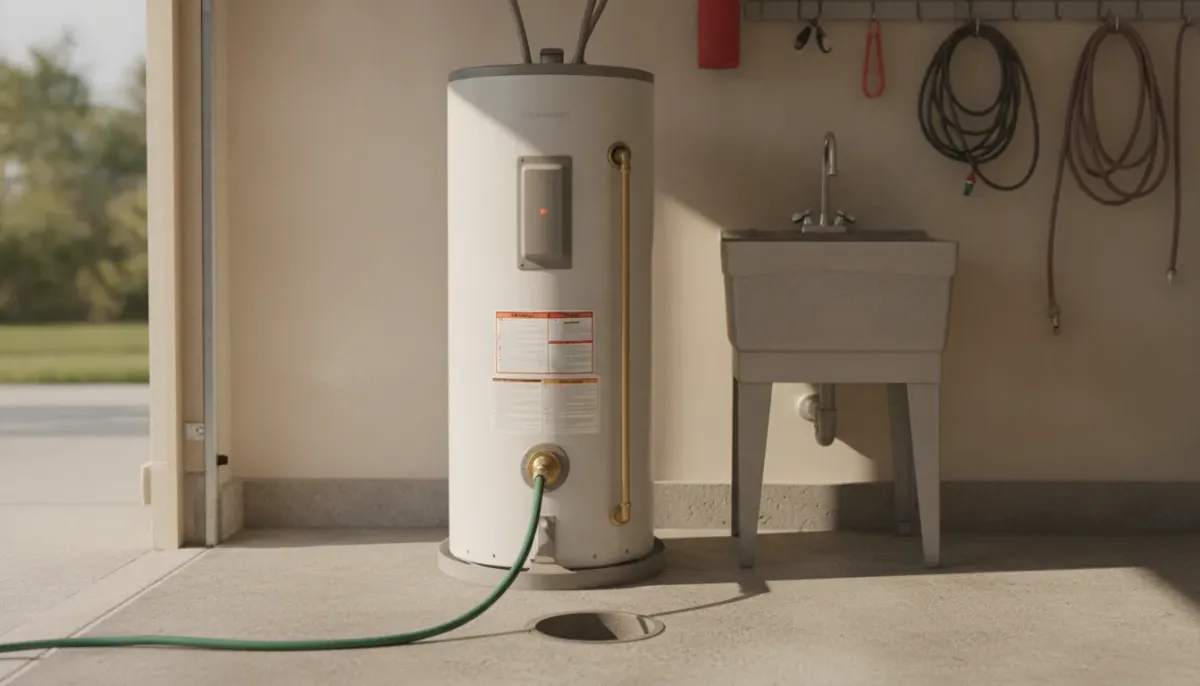
If you are searching for how to repair electric water heater trouble in a Boynton Beach home, start with what you can see and what you should leave alone. An electric storage heater uses power, a tank of hot water, and pressurized piping. Those three things are why a cold shower is not a do-it-yourself project for most households. A useful repair conversation begins with safe observations: which fixtures lost hot water, whether a breaker tripped, and whether you see water at the tank. A licensed plumber then confirms the cause before any repair or replacement starts.
If the heater is leaking, sparking, or leaving the house without usable hot water, review emergency plumbing in Boynton Beach and call (561) 968-0000. Who gives a drip? We do.
How to Repair an Electric Water Heater Without Opening It
The safe version of how to repair an electric water heater is an observation checklist, not a parts swap. Do not remove access panels, test wires, or drain the tank. Do not loosen the temperature and pressure relief valve either. Those steps put you next to live power, scalding water, or a pressurized connection.
Before you call, write down a few facts a plumber can use:
- Whether every hot faucet is cold, or only one bathroom or kitchen faucet.
- Whether the water is lukewarm, runs hot for a minute, or never warms up.
- Whether a breaker for the heater is off, and whether it stays off after one reset.
- Whether you see water on the floor, rust at the tank base, or moisture around fittings.
- The approximate age of the heater, if a label or prior invoice shows it.
- Any recent change, such as a power outage, a renovation, or a new fixture.
A single cold faucet with normal hot water everywhere else often points to that fixture or its supply line, not the heater. Whole-house loss of hot water is a different question. The U.S. Department of Energy water heating fact sheet describes a storage water heater as a tank that keeps a reservoir of hot water ready. Conventional electric resistance units are heated by elements. If that reservoir is not recovering, the tank, the power supply, or the controls may be involved. Only an on-site look can say which one.
If a breaker is off, reset it once and stop. If it trips again, leave it off and call. Repeated trips can mean an electrical fault. Do not bypass a breaker, replace it with a larger one, or open the heater to look for a burned wire.
What an Electric Storage Heater Can and Cannot Show You
Most homes in this area that use electricity for hot water have a storage tank, not a tankless unit. A DOE Building America fact sheet prepared for the Department of Energy notes that storage heaters hold about 20 to 80 gallons. Conventional electric units use resistance heating. The same fact sheet says a typical electric tankless unit can raise water about 70 degrees at roughly two gallons per minute. That is a low-demand flow, not a whole-house shower load.
That difference matters when you describe the problem:
- Electric storage tank. Hot water is stored and reheated in the tank. A failed element, a tripped high-limit control, sediment, or a leaking tank can all cut the hot water. You can note symptoms. You should not open the panels to test an element.
- Gas storage tank. Heat comes from a burner and venting, not from electric elements. A gas smell, a yellow flame, or a pilot that will not stay lit is a gas-safety issue. Leave the area if you smell gas and follow your utility’s instructions. Do not treat a gas heater like an electric one.
- Tankless heater. There is no large stored reservoir. A cold shower can be a flow, venting, scale, or error-code issue. That is a different service conversation from an electric tank repair. Hardenburgh also services tankless heaters, and that visit confirms the model and the fault before any repair.
The U.S. Consumer Product Safety Commission tap-water scald guide says most electric water heaters have two thermostats. Both need a matching setting for proper operation. Reaching them means removing the upper and lower access panels after power is shut off. CPSC still points that adjustment to the manufacturer’s instructions. For many homes, the safer path is to have a plumber or the electric utility do it. Do not pull those panels to see if an element looks bad.
Safe Checks Before You Request Electric Water Heater Repair
These checks stay outside the heater. If any step feels unsafe, skip it and call.
- Confirm the symptom. Run hot water at a sink far from the bathroom that failed. If that sink is hot, the heater may be fine and the problem may be a cartridge, a shutoff, or a clogged aerator at one fixture.
- Look, do not touch hot fittings. With a flashlight, look at the tank base, the pan if one is present, and the pipe connections. A wet floor, active drip, or rust streak is worth a same-day call, especially if water is reaching finishes or a lower floor.
- Find the breaker, then stop. At the panel, see whether the heater’s double-pole breaker is tripped. Reset it once. If lights on that circuit were never the issue and the breaker will not stay on, leave it off.
- Note temperature, do not chase it. If water is scalding, keep children and older adults away from that tap. CPSC Publication 5098 urges households to keep water heaters at 120 degrees Fahrenheit to reduce tap-water scalds. The same publication says 140-degree water can cause a serious burn in about six seconds. Changing an electric thermostat means killing power and opening panels. That is not a casual adjustment.
- Shut off water only if a leak is active. If water is spreading, close the cold-water valve on top of the heater if you can do it without touching electrical parts. If you cannot find that valve, use the main house shutoff and call. Do not drain the tank through the relief valve to “stop the leak.”
None of those steps repairs an element, a thermostat, a dip tube, or a leaking tank. They keep the house safer and give the technician a cleaner starting point.
Symptoms That Point to Different Electric Heater Problems
Homeowners often use one phrase, “no hot water,” for several different failures. The pattern helps a plumber narrow the visit. It does not diagnose the heater from the driveway.
No hot water at all
Every hot faucet stays cold after a long wait. On an electric tank, power is the first question: a tripped breaker, a high-limit trip, or a failed element can stop recovery. A gas heater with the same symptom is a different appliance. Say “electric tank” when you call so the visit is planned around electrical checks, not a burner.
Hot water that runs out fast
You get a short burst of hot water, then it fades. Sediment, a failing lower element, or a tank that is too small for the household can do this. Flushing is maintenance, not an emergency repair. The steps differ for gas, electric, and tankless heaters. If you want the maintenance sequence, read how to flush a water heater safely. Stop if the procedure asks you to work around power or gas.
Water that is too hot or swings in temperature
A thermostat setting, a failed control, or a cross-connection at a fixture can change temperature. Test with your hand before a child uses the tap. Do not keep raising the setting to “fix” lukewarm water. Higher stored temperatures raise scald risk, which is the reason CPSC points households toward 120 degrees.
Water on the floor or rust at the tank
A fitting leak, a relief-valve discharge, or a tank that has failed can all look like a puddle. A fitting may be repairable. A rusted-through tank usually means replacement. Photograph the wet area if you can do it safely, then limit the water. For the broader repair-or-replace question, see when to repair versus replace your water heater. That guide covers lifespan and replacement signs. This article stays on the electric symptoms you can describe before that decision.
A popping or rumbling tank
Noise often comes from sediment heating on the bottom of an electric tank. It is a reason to schedule service, not a reason to drain the heater yourself if you are unsure how to kill power first. Mention the sound, how long you have heard it, and whether hot water still recovers.
What to Ask a Plumber About an Electric Heater Repair
Hardenburgh Plumbing diagnoses, repairs, and replaces tank and tankless water heaters. The visit should explain the work and get your approval before anything starts. There is no charge to come out for an estimate, and some estimates can be done by video. That estimate is not a free whole-house plumbing inspection, and it is not a promise that every electric heater can be repaired.
Questions worth asking once the technician is looking at the unit:
- Is the heater getting power, and did a breaker or high-limit control trip?
- Are you recommending an element, a thermostat, a valve, or a tank replacement, and why?
- Is the temperature and pressure relief valve doing what it should, or is it the source of the water?
- Will the repair restore normal recovery for this household size, or is the tank undersized?
- What will you need to shut off, and how long might the house be without hot water?
- If replacement is the honest option, what electric tank or tankless choices fit this closet, panel, and demand?
Upfront pricing here means the technician explains the job and waits for approval. It does not mean a published rate card. Age, parts, access, and whether the tank itself has failed all change the quote. Do not expect a phone quote to name a price before someone sees the heater.
For a wider look at water-heater work the company offers, the water heater installation and repair services page covers tank and tankless repair, replacement, and maintenance. A West Palm Beach symptom guide is separate: water heater repair in West Palm Beach answers when to call in that city. It is not a substitute for this electric-heater checklist.
Boynton Beach Homes: What to Share When You Call
Boynton Beach houses and small commercial spaces do not all have the same heater closet. A slab-home utility room, a garage tank, and an upstairs condo closet each change access. Tell the office which one you have so the visit is planned around the real unit.
Share these details:
- The city, and whether the property is a house, condo, or small business.
- Electric tank, gas tank, or tankless, if you know. A photo of the label helps.
- Whether hot water failed at one fixture or the whole property.
- Whether water is leaking now, and whether you already closed a valve.
- Whether a breaker tripped, and whether it stayed on after one reset.
- Anyone in the home who is at higher risk from scalding water or from no hot water, such as a young child or an older adult.
Hardenburgh Plumbing serves Boynton Beach for residential and commercial plumbing, including water-heater repair. That does not mean every service is dispatched to every town at every hour, and it does not promise a guaranteed arrival time. Emergency pages describe 24/7 response for urgent problems such as an active leak or a loss of hot water that the household cannot wait on. A booked visit is a different schedule. If you are comparing local plumbing help more broadly, plumber help in Boynton Beach covers residential and commercial questions beyond water heaters.
Ted G. Hardenburgh is an active Florida Certified Plumbing Contractor, license CFC048265, associated with Hardenburgh Plumbing, Inc. Not every technician is a certified contractor, and the company does not publish a company-wide warranty term.
When Repair Is the Wrong Next Step
Some electric heater problems should not wait for a routine appointment, and some should not be “repaired” at all.
- Call promptly if water is actively leaking, a breaker will not stay on, you see scorching, or the house has no hot water and someone in the home depends on it.
- Leave gas issues to gas procedures if you smell gas. An electric-heater article does not cover a gas leak. Follow the utility’s emergency instructions.
- Ask about replacement if the tank is rusting through, the same element or leak has returned, or the household has outgrown the tank. The on-site quote is the place to compare repair and a new electric tank or tankless unit.
- Do not raise the thermostat to force more hot water. CPSC’s scald guidance is the reason. If 120 degrees is not enough for a dishwasher, ask the plumber about that appliance’s own heater before you store the whole tank hotter.
A repair that needs a new element or thermostat is still electrical work on a water-filled appliance. Manufacturer steps that say “turn off the breaker, then remove the panel” are written for people who are equipped to do that job. If you are not, the right repair is the one a plumber finishes after you have described the symptoms.
Frequently Asked Questions
Can I repair an electric water heater myself?
You can gather safe observations: which fixtures failed, whether the breaker tripped once, and whether the tank is leaking. Replacing an element or adjusting both thermostats means shutting off power and opening panels. For most homes, that work belongs with a plumber who can test the heater and price the repair before starting.
Why did my electric water heater stop heating?
Common causes include a tripped breaker, a tripped high-limit control, a failed heating element, or a thermostat problem. A gas heater fails for different reasons. Tell the plumber it is an electric tank so the visit checks power and heating parts instead of a burner.
Is lukewarm water a repair or a replacement?
Lukewarm water can be a control, an element, sediment, or a tank that no longer keeps up. It is not automatic proof that you need a new heater. The assessment should say whether a repair restores recovery or whether the tank, age, or leak history makes replacement the clearer option.
What temperature should an electric water heater use?
CPSC urges users to lower water heaters to 120 degrees Fahrenheit to reduce tap-water scalds, and it warns that hotter water burns in seconds. Do not open the thermostat panels to chase that number yourself. Ask the plumber to confirm the setting during the visit, especially if children or older adults use the taps.
Who do I call for an electric water heater in Boynton Beach?
Hardenburgh Plumbing can assess tank and tankless water heaters for Boynton Beach homes and businesses. Call (561) 968-0000 or use the contact form. If water is leaking or the property has lost hot water, start with the Boynton Beach emergency plumbing page so the request matches the urgency.
Ready for a plumber to look at the electric water heater? Call (561) 968-0000 or send a note through the contact form. You may not know us, but your house does.


