Well Pump Not Working: Safe Checks First
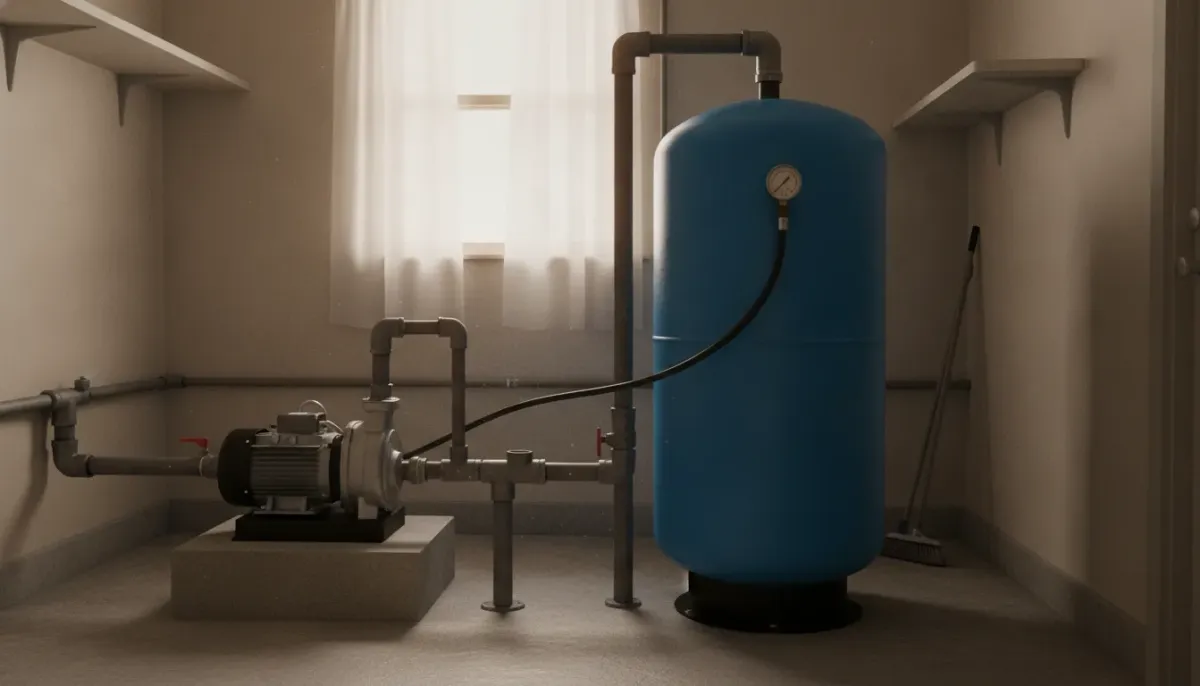
A well pump not working usually shows up as no water, a weak trickle, or water that starts and then dies. In a Loxahatchee home on a private well, the cause might be a tripped breaker. It might be the pressure tank or the switch. It might be a leak between the well and the house, or the pump itself. Some of those clues are safe to write down. Opening the control box, the well cap, or live wiring is not.
Hardenburgh Plumbing installs, troubleshoots, and repairs house pumps, sprinkler pumps, and pool pumps. The work covers homes and businesses in Palm Beach County, including Loxahatchee. The company has been at it since 1989. People know it as the Home of the Repipe Plumbers. A pump visit is separate from a pipe-type inspection. Call (561) 968-0000, say you are in Loxahatchee, and ask whether a technician can come out. Do not assume a clock time, a weekend slot, or a repair on the first trip.
Call (561) 968-0000 for well pump service
What “well pump not working” usually means
People use the phrase in a few different ways. Sorting them first keeps you from treating a house plumbing problem like a dead well.
- No water at any faucet. Toilets will not refill and outside spigots are dry too. That points at the supply from the well, not at one clogged fixture.
- Water, then nothing. You get a short burst, then the flow stops. The pressure tank may have given up the water it was holding, and the pump is not refilling it.
- Some fixtures only. One bath is weak and the kitchen is fine. That is more often a valve, aerator, or house-pipe issue than a pump that has quit.
- The pump will not stop. You still have water, but the system runs long after you close the faucet. That is a different problem from no water, and it still needs a look before the motor overheats.
Hardenburgh’s well pump service page separates pump work from controls, check valves, the pressure tank, and wiring. Age alone does not tell you which part failed. If you want the lifespan picture, the how long a well pump lasts guide covers the published ranges. This page stays on what to do when the water is already gone.
Safe checks before you call
Stay on the dry side of the room. If the floor is wet, if you smell something burning, or if a wire looks scorched, skip the list and call. University of Nebraska Extension describes the same first split for a private well. See whether the rest of the house has power. Look at the pump breaker. Call a licensed professional if that does not bring the water back.
- Check other rooms, not just one faucet. Try a cold faucet at the opposite end of the house and an outside hose bib if you can reach it without crossing standing water. No water anywhere means the problem is upstream of the fixtures.
- See whether the house has power. Turn on a light that is not on the pump circuit. A dark house is an outage. A lit house with a dead pump is a pump-circuit or pump-system problem.
- Look at the breaker only if the panel is dry. Find the breaker labeled for the well or pump. If it is in the middle, switch it fully off, then back on once. If it trips again, leave it off. Do not hold it on.
- Note what the pump is doing, from a distance. A jet pump in a garage or pump house may hum, click, or sit silent. A submersible pump is down the well, so you may only hear a click at the control box or see the pressure gauge move. Write down which one you notice. Do not open the box.
- Read the pressure gauge if you can see it without touching wiring. A gauge sitting at zero while faucets are closed is a useful note. So is a gauge that falls as soon as you shut the water off. Do not adjust the pressure switch to “fix” the number.
- Look for water where it should not be. A soggy spot in the yard between the well and the house, a wet pressure tank, or water at a fitting in the pump room can mean a leak. Nebraska Extension points to a stuck-open check valve or a broken line when a pump runs continuously or pressure will not hold. Mark the spot. Do not dig.
- Think about the last day. A thunderstorm, a power blink, a new irrigation cycle, or a filter you just changed belongs in the note you give the plumber. So does “it has been weak for weeks” versus “it died an hour ago.”
That is the safe list. It is observation, not a repair.
What not to open, adjust, or run
A private-well pump is an electrical machine tied to water. Mixing the two is how a no-water call turns into a shock or a burned motor.
- Do not remove the well cap or pull pipe out of the well. You can drop tools, contaminate the well, or damage the wire that feeds a submersible pump.
- Do not open the control box, pressure switch, or capacitor cover. Those parts can hold a charge. Looking is not the same as diagnosing.
- Do not keep resetting a breaker that trips again. One reset tells you it was a blip. A second trip means stop.
- Do not turn the pressure-switch nuts to chase a number on the gauge. The cut-in and cut-out settings are matched to the tank. Moving them can make a tired pump start more often.
- Do not run a generator into the pump unless an electrician has already set that up. A wrong-sized generator can damage the motor. Never run a generator indoors, even with the doors open.
- Do not treat this like a city-water shutoff drill and start taking fittings apart to “find the clog.” If every faucet is dry, the clog theory is unlikely.
If wires, conduit, or a connector look burned or melted, leave them alone. Power to the pump should be off before anyone inspects those parts, and damaged wiring is not a homeowner repair. Say that on the call so the visit starts with the electrical hazard instead of a pump guess.
Clues that point away from the pump
Not every dry faucet is a failed pump. A few patterns are worth naming so the person on the phone can steer the visit.
| What you notice | What it often suggests | What to do |
|---|---|---|
| No water anywhere, house lights work, breaker stays on | Pump, control, or a line between the well and the house | Stop resetting things. Call and describe the gauge and any sound. |
| Short burst, then nothing | Tank held a little water and is not being refilled | Note how long the burst lasted. Do not adjust the switch. |
| Pump runs and will not stop, pressure falls | Possible leak or a check valve that is not holding | Look for a wet spot. Leave digging and valve work to the visit. |
| Pump clicks on and off every few seconds | Often a pressure-tank air problem, not proof the pump is dead | Use the pressure-tank guide. Do not add air or change settings. |
| Only one faucet is weak | More likely a fixture, valve, or house pipe | Say which rooms work. Ask whether a pump visit is the right call. |
| No power in the house | Utility outage, not a pump diagnosis | Wait for power unless there is flooding or a burning smell. |
| Water is back but looks or smells different after an outage | The system lost pressure and may need a water test | Do not drink it until it has been tested. Say so when you call. |
Rapid clicking belongs in a different article. A separate guide on pressure-tank signs covers short-cycling, a swinging gauge, and water around the tank. Use that kind of note when you still have water and the pump will not stay quiet. Use this page when the water has stopped.
The older seven signs a well pump is failing post is the warning list: sputtering, sandy water, odd noises, and a pump that runs all the time. It is useful background, but it is not a step order for the morning the house goes dry.
After a storm or a power blink
Many Loxahatchee lots sit on private wells, and summer storms knock the power around. A pump that was fine at noon can sit silent after the lights flicker back on.
Start with the same safe checks. If the whole house was dark and power is back, one breaker reset is reasonable when the panel is dry and you are not standing in water. If the breaker will not stay on, stop. If water returns but spurts air, or the color or smell is off, do not treat that as an all-clear for drinking. Loss of pressure can let contamination into a private well, so a water test is a separate question from getting the pump running again. Damaged electrical parts belong to an electrician or the technician on the pump visit, not to a reset.
Do not climb on a flooded pump slab. Do not open a soaked control box to dry it with a towel. Tell the plumber the power went out, about when it returned, and whether the breaker stayed on.
For a burst pipe, a sewer backup, or a leak that is not a well problem, the emergency plumber in Loxahatchee guide covers first steps that are different from a pump checklist. Gas odor near equipment is a leave-the-house problem, not a pump reset.
What to tell Hardenburgh when you call
The useful call is short and specific. You are not expected to name the failed part.
- You are in Loxahatchee, not Loxahatchee Groves, if that is the case. They are different places, and the dispatcher needs the right one.
- Whether every faucet is dry, or only some.
- Whether the house has power, and what the pump breaker did when you reset it once.
- Any sound: silence, a hum, a click, or a pump that will not shut off.
- The gauge reading if you could see it safely, and whether a yard spot is wet.
- Jet pump in the garage or pump house, or a submersible with only a control box in sight. If you do not know, say so.
- Recent storm, power loss, filter change, or irrigation use.
- Anyone in the house who needs water for medical reasons, so the call can be described accurately. That is context, not a promise of a faster truck.
Hardenburgh can talk through pump installation, troubleshooting, repair, and maintenance. The technician confirms the cause on site. The phone call does not.
Send the pump details on the contact form if you cannot call, or dial (561) 968-0000 and ask for well pump service in Loxahatchee.
What the visit can and cannot settle
A pump call confirms what a checklist cannot. The technician can see whether the motor is getting power, whether the pressure tank and switch match the system, whether a check valve is holding, and whether the well is still giving up water. Some jobs turn out to be a control or a tank. Others are the pump itself, or a line buried in the yard.
The visit does not come with a price quoted from a web page. Upfront pricing at Hardenburgh means the technician explains the work and gets approval before starting. There is no rate card here.
It also does not include well drilling. Hardenburgh is a plumbing contractor. Pump installation and repair are on the service list. A new well is not. If the well itself is the limit, the plumber can say so. That is not the same as promising a new pump will fix a dry hole.
The free offer on the site is a pipe-type and repipe-needs inspection, and the FAQ notes there is no charge to come out for an estimate. That is not a free pump teardown and not a free whole-house visit. Ask what the trip includes when you call.
Ted G. Hardenburgh is an active Florida Certified Plumbing Contractor, license CFC048265, with Hardenburgh Plumbing, Inc. That does not mean every person on a job site holds the same license. Weekend access is not something to advertise as automatic. Emergency pages discuss round-the-clock help, and booked visits can be a different schedule. Ask.
If you are comparing this with other plumbing help in the same area, the Loxahatchee plumber page lists residential services and how to confirm dispatch. Keep the pump question on this checklist so the two pages do not answer the same thing.
A simple way to decide your next step
Use the observations you already made.
- Water at some fixtures: tell the plumber which rooms work. Ask if they want a pump visit or a fixture visit.
- No water, one breaker reset holds, still no water: stop there and call. You have done the safe check.
- Breaker trips again, burning smell, wet panel, or damaged wire: leave the equipment alone and say that first.
- Water is on but the pump chatters: switch to the pressure-tank signs and write those down instead of forcing this checklist to fit.
- You want to know if the pump is “due” by age: read the lifespan guide after the water is back. Age is not today’s repair plan.
Private well owners are responsible for their own water. The U.S. Environmental Protection Agency’s private-well overview explains that most private wells are not regulated the way public water systems are. A plumbing visit restores equipment. A water test, when you need one after a loss of pressure, is a separate step through a certified lab or the local health department. The Nebraska Extension guide to well mechanical parts is the source for the breaker check, the continuous-run clue, and the short-cycle tank clue used above. Those are general private-well observations, not a Florida code citation and not a Hardenburgh diagnosis.
Frequently asked questions
Why is my well pump not working when the rest of the house has power?
The pump is often on its own breaker. If that breaker stays on and every faucet is still dry, the cause may be the pump, the controls, a pressure problem, or a leak before the house. One reset is a fair check. After that, the useful move is a description of what you saw, not another try.
Can I adjust the pressure switch if the gauge reads low?
No. The switch tells the pump when to start and stop. Turning the nuts changes that relationship and can make the motor start too often. Note the gauge reading and leave the switch alone.
Does no water always mean the pump must be replaced?
No. Hardenburgh’s pump page says controls, the pressure switch, check valves, the pressure tank, and wiring can be the cause instead of the pump. Replacement is a conclusion after someone looks, not a guess from a dry faucet.
Should I keep using the water after the power comes back?
If the flow is steady and looks and smells normal, still mention the outage when you call if the pump misbehaved. If water spurts air, or the color or smell changed, do not drink it until a certified lab or the health department has tested it. Loss of pressure is a reason to ask about testing. It is not, by itself, proof the pump motor failed.
Who do I call for a Loxahatchee well pump that stopped?
Call Hardenburgh Plumbing at (561) 968-0000. Say Loxahatchee, describe the safe checks, and ask whether a technician can troubleshoot the pump. You can also use the contact form. Neither one locks in an arrival time.
Get the water question in front of a plumber
If the well pump is not working, you do not need to name the part that failed. You need a clear note and a person who works on pumps. Hardenburgh Plumbing can take that call for Loxahatchee homes and for other Palm Beach County properties when dispatch is confirmed.
Who gives a drip? We do. Call (561) 968-0000 and ask for well pump service.