When to Call an Emergency Plumber in Boca Raton
When should a homeowner call an emergency plumber? Call when water is actively damaging the home, sewage is backing up, a safety concern is present, or an essential plumbing fixture cannot be used. A small drip or isolated clog may be able to wait, but the right decision depends on whether the problem is spreading and whether you can contain it safely.
Call for emergency plumbing help
What makes a plumbing problem an emergency?
Start with three questions: Is damage continuing? Is anyone at risk? Has the home lost an essential plumbing service? The more immediate the risk, the stronger the case for a prompt call. You do not need to identify the failed part before calling. Describe what you can see and what has changed.
- Water is flowing or spreading: A burst pipe, failed supply line, or leak that continues after the fixture is off can wet floors, walls, cabinets, and belongings. Water may also travel behind a wall or below flooring, so a small visible puddle may not show the full extent.
- Wastewater is backing up: Sewage coming up through a toilet, tub, shower, or floor drain is a sanitation concern. Keep people and pets away and stop using fixtures that may feed the affected line.
- Essential plumbing is unavailable: A home with no usable toilet, or a failure affecting several fixtures, may need urgent help. If another toilet or sink still works, explain that when calling.
- There may be a safety hazard: Water near electrical equipment, a gas odor, or a water heater with a scorched smell deserves caution. Leave the hazardous area and contact the appropriate emergency service or utility from a safe location when needed.
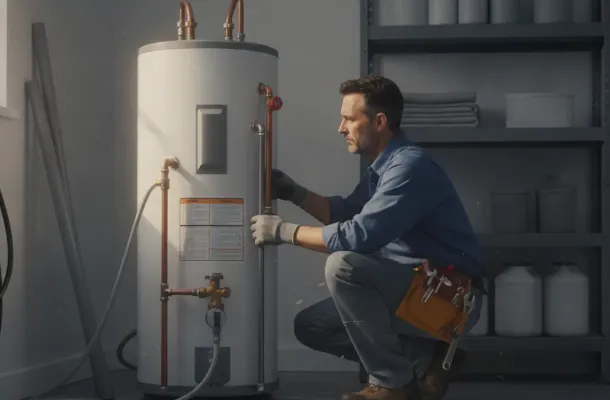
- A water heater is leaking or behaving abnormally: A leak, unusual noise, burning odor, or other safety symptom is different from a heater that simply produces no hot water. Do not open the unit or attempt gas or electrical repairs.
Hardenburgh Plumbing provides 24/7 emergency plumbing service. Calling does not guarantee a particular arrival time or same-day completion. Explain the symptoms and ask what next step is appropriate.
When can a plumbing problem usually wait?
A problem may be suitable for a scheduled repair when there is no continuing water loss, no sewage, no hazard, and essential fixtures remain usable. Examples include a faucet that drips only when used, one slow drain that is not overflowing, or a toilet that runs intermittently but still flushes and does not overflow.
“Can wait” does not mean “ignore it.” A drip can worsen, and a slow drain can become a backup. Keep an eye on whether the symptom changes. If dampness spreads, other fixtures become affected, an odor appears, or the problem returns soon after a temporary measure, call and describe that change.
Use the pattern, not just the fixture
One clogged sink with normal drains elsewhere points to a different urgency level than several drains slowing at once. A single toilet that is out of service may be manageable if another works; a home with only one toilet has a more immediate loss of use. A contained drip into a bowl is not the same as water appearing through a ceiling. Explain the pattern instead of trying to name the cause.
What should you do before the plumber arrives?
Keep the first steps simple: protect people, limit the source only if safe, and preserve useful information. Do not put yourself in danger to save a floor or belongings.
- Move people away from hazards. Keep children and pets clear of wet areas and wastewater. Do not stand in water near outlets, appliances, cords, or electrical panels.
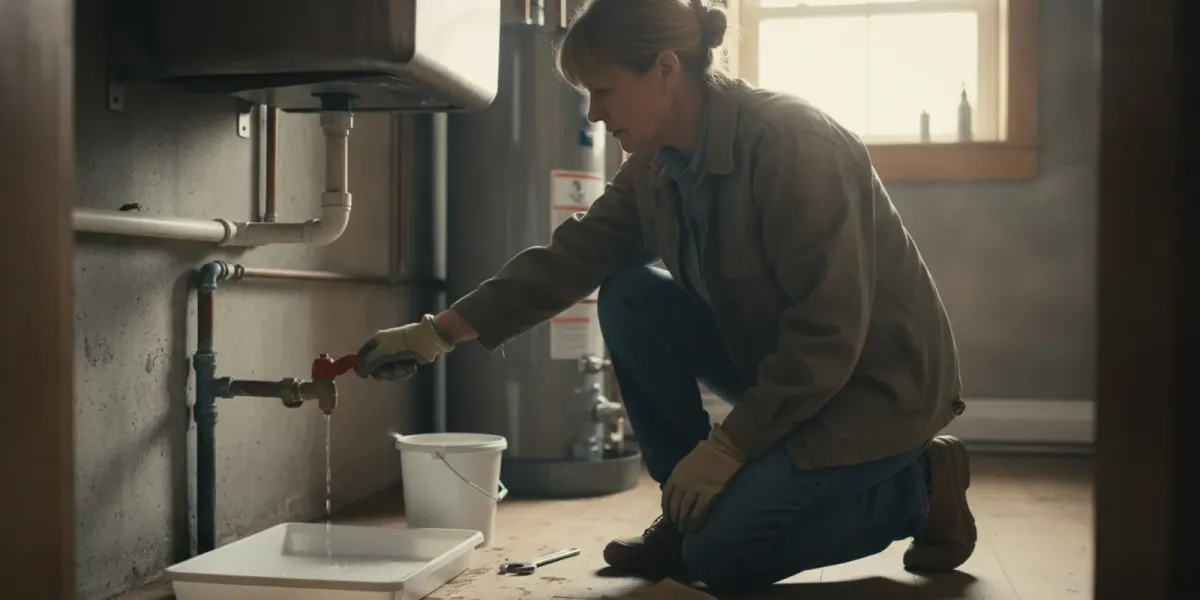
- Use a shutoff only if it is accessible and safe. A fixture valve may stop a localized leak. For a larger leak, use the main water shutoff only if you know where it is and can reach it safely. Do not force a stuck valve or enter a flooded space to reach one.
- Stop feeding an affected drain. If wastewater is backing up, avoid running sinks, showers, washing machines, or other connected fixtures. Do not keep flushing a toilet that is contributing to the backup.
- Protect belongings from a safe position. Move items away from a small clean-water leak only if you can do so without crossing a wet or hazardous area. A container or towel may help with a minor drip, but do not enter contaminated water or open a ceiling that may be holding water.
- Take photos and note the timeline. From a safe place, record where water first appeared, which fixtures are involved, and whether the flow is increasing. Do not delay urgent safety steps to document it.
- Keep the area accessible. If safe, clear a path to the affected fixture or shutoff and secure pets. Do not remove panels, cut drywall, or dismantle equipment.
For gas odor, leave the building and contact the gas utility or emergency services from outside. If water has reached electrical equipment, stay clear and seek appropriate emergency guidance. For general public-health resources, consult the Centers for Disease Control and Prevention; for sewage exposure or cleanup questions, follow local public-health instructions.
How can you prepare without making the problem worse?
Once people are safe and the immediate source is controlled where possible, a few small preparations can make the service conversation clearer. Do not take plumbing apart or enter a hazardous area.
- Identify the affected zone. Note whether the issue is under a sink, beside a water heater, near a toilet, or showing below another room. Report where water is visible rather than guessing at a pipe.
- Notice what was happening. Was a shower running, a toilet recently flushed, or a washing machine draining when the problem appeared? This context may help explain the timing.
- Keep equipment information handy. If a water heater is involved, note whether it is tank or tankless and its fuel type if known. Do not move it or remove a cover to find a label.
- Report temporary fixes. Mention if a valve is closed, a drain is no longer being used, or a leak stopped on its own. A temporary change can matter even if the symptom returns.
- Make access safe. Keep pets away and move loose items only when the route is dry and safe. Do not put yourself under a wet ceiling.
For a commercial property, tell the person responsible for the building which rooms, tenants, or operations are affected. A restaurant manager may need to report a drain backup near a food-preparation area; an office manager may need to identify a restroom out of service. Do not reopen an affected area until the hazard is addressed.
What can change the urgency while you wait?
Reassess if conditions change. A leak that stops and starts again, a new damp patch, or a second fixture that begins backing up is important information. Contact the plumber again or seek emergency guidance if the situation worsens.
Water can remain in building materials after a source is stopped, and a ceiling can stay wet after a fixture valve is closed. Keep away from sagging or visibly damaged ceilings. A quiet drain may still back up again, so avoid testing it repeatedly by running water.
Think of the call as a handoff of observations: what happened, what you changed, what remains affected, and what has improved or worsened. If there is immediate danger, prioritize emergency services or the utility over documenting details.
How do you choose between a call now and a scheduled request?
Use this sequence to organize what you observe. It is not a substitute for a plumber’s diagnosis.
- Check for danger first. Gas odor, electrical exposure, or a person at risk means leave the area and contact the appropriate emergency resource. Do not attempt a plumbing repair while a hazard is active.
- Ask whether water or wastewater is still moving. Ongoing flow, spreading dampness, or a backup that returns when a fixture is used raises urgency. If it is safe, shut off the source or stop using connected fixtures.
- Count affected fixtures. One isolated slow drain differs from multiple drains or toilets showing symptoms. Report how many fixtures are involved.
- Consider what the household has lost. No usable toilet, no water, or a major loss of hot water can affect basic use. State whether another fixture or service remains available.
- Describe facts, not guesses. Ask whether the symptoms call for emergency service or a scheduled visit. Do not assume a suspected pipe location or repair method is correct.
For example, imagine a damp spot beneath an upstairs bathroom. If it is growing and dripping into a light fixture, leave the area and seek appropriate safety help before approaching the plumbing. If a small leak is safely stopped at a fixture valve and is nowhere near electricity, report that it has stopped and ask about service options. Those are materially different situations even if both began with a wet ceiling.
What should you tell the plumber when you call?
A concise description is more useful than a confident guess about which pipe failed. Share what you observe:
- Your address and a callback number.
- Whether water is still flowing and whether you shut off a valve.
- Which rooms, fixtures, or drains are affected.
- Whether sewage, unusual odors, or possible electrical or gas hazards are present.
- When the problem began and whether it is getting worse, stopping, or returning.
- Whether other toilets, sinks, or water sources remain usable.
- Any safe steps already taken, such as keeping people away or moving belongings.
A useful description might be: “Water is coming through the ceiling below the upstairs bathroom. It is still dripping. I turned off the toilet valve, but the ceiling remains wet.” If you do not know the cause, say so. The plumber can ask follow-up questions.
How do leaks, backups, and water-heater problems differ?
Active leaks
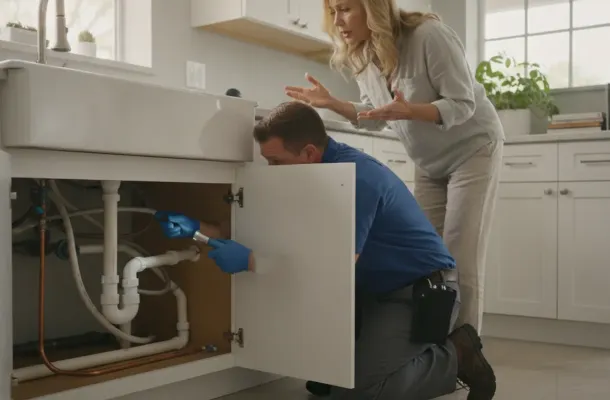
Water escaping from a supply line or fixture can damage building materials and contents. A leak may be obvious under a sink or hidden in a wall, slab, or ceiling. If a visible fixture shutoff stops it and the area is safe, report that; if it continues or seems concealed, say so. Avoid assuming the nearest damp spot marks the source. For more about water leak detection and slab leak detection, see the service pages.
Drain or sewer backups
A single slow drain and a backup affecting several fixtures are different patterns. Stop using drains that appear connected to the problem, especially if wastewater is surfacing. Do not pour chemical cleaner into a backed-up fixture; it may leave a hazardous substance for whoever works on the line. A plumber can assess whether cleaning, hydro jetting, camera inspection, or repair fits the condition. Learn about drain cleaning services, and explain whether one drain or several are affected.
Water-heater trouble
A leaking water heater or one with a burning odor calls for caution. Do not remove covers, adjust gas components, or work on electrical connections. If the heater simply stops supplying hot water and there is no visible leak or other hazard, it may be a repair request rather than an immediate danger. Share the heater type if known. Hardenburgh Plumbing works on tank and tankless water heaters.
What should you avoid doing?
- Do not touch switches, appliances, cords, or electrical equipment while standing in or near water.
- Do not climb onto a wet roof, enter a flooded crawlspace, or open a waterlogged ceiling.
- Do not attempt gas appliance repairs or pipe repairs beyond a shutoff you understand and can reach safely.
- Do not keep using fixtures that appear to feed a backup.
- Do not mix drain chemicals or add another product to a backed-up line.
- Do not force a corroded or stuck shutoff valve.
- Do not assume a leak is fixed just because water temporarily stopped. Note what changed and report it.
Frequently asked questions
Should I call if I can catch the leaking water?
Call promptly if the leak continues, the wet area grows, or you cannot safely stop the flow. A container may limit a small drip temporarily, but it does not identify or repair the cause. If water is near electricity or the leak appears concealed, keep clear and describe what you see.
Is a clogged toilet always an emergency?
No. If one toilet is clogged, other plumbing works, and nothing is overflowing, stop using that toilet and request service. Treat it as urgent if wastewater is coming out, multiple fixtures are backing up, or the home has no usable toilet.
Should I turn off the main water supply?
Only if you know where the valve is and can reach it safely. Turning it off may limit an active supply leak. Do not force a stuck valve or enter a hazardous area to reach it, and tell the plumber whether you shut it off.
Can I wait until morning?
If water is still escaping, sewage is surfacing, or a hazard is present, do not assume waiting is safe. If the leak has stopped, the area is contained, and no safety or sanitation issue remains, call to describe the situation and ask about options. No particular arrival or completion time is guaranteed.
What should you do next?
If active water, sewage, a safety concern, or loss of essential plumbing is affecting your home, call Hardenburgh Plumbing at (561) 968-0000 and explain what you observe. The company provides 24/7 emergency plumbing service; your description helps the team understand the issue without requiring you to diagnose it.
For a contained issue without immediate risk, request service and keep the affected fixture out of use until it has been checked.