How Long Does a Well Pump Last?
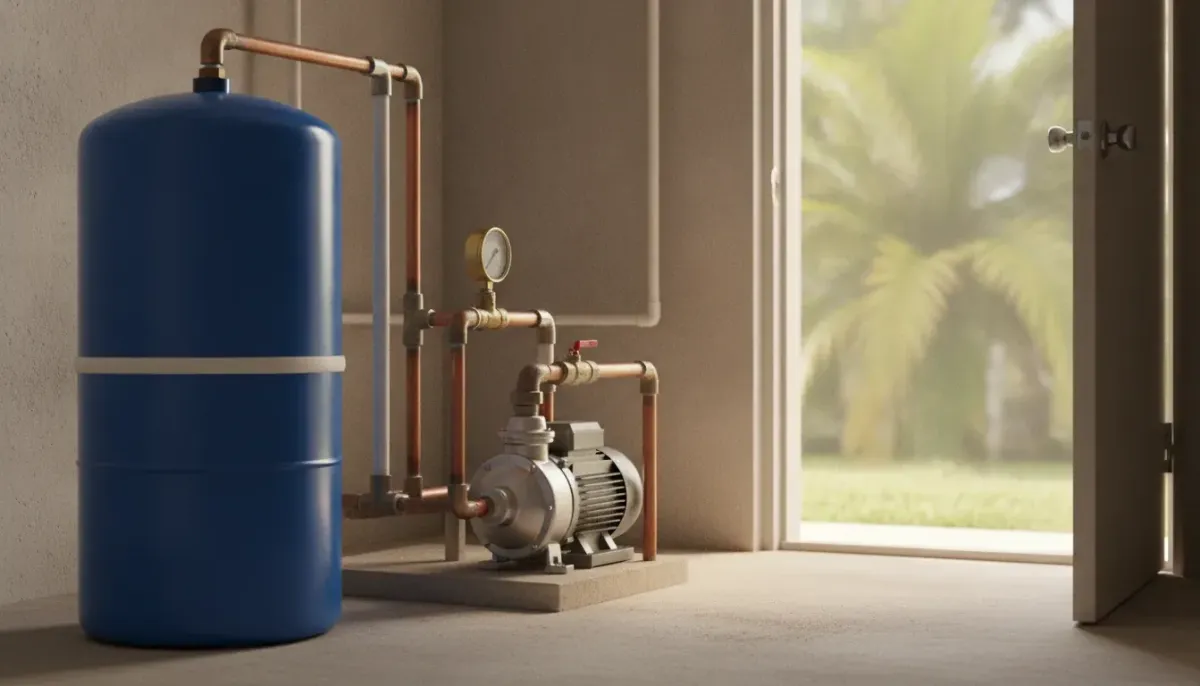
How long does a well pump last? Published trade ranges usually put a residential pump somewhere between 8 and 15 years. Many submersible pumps are described closer to 10 to 15 years. That is a planning range, not a promise for your house.
A lightly used pump on clean water can run longer. A pump that short-cycles, runs sandy water, or sits on a weak electrical supply can fail sooner. In Palm Beach County, the useful question is what your pump, pressure tank, and well are doing now.
Call Hardenburgh Plumbing at (561) 968-0000
Hardenburgh Plumbing installs, repairs, and maintains pumps for homes and businesses across Palm Beach County. An on-site look can tell you the pump type, how often it starts, and whether another part is wearing it out. It cannot name a remaining year count.
If the pump has already quit and you have no water, start with the symptoms on our well pump repair signs page. Come back here for the lifespan picture.
How long does a well pump last in a house?
There is no single age that fits every private well. Service companies and trade articles commonly describe a residential well pump as lasting about 8 to 15 years. Submersible pumps, the kind that sit down in the well. Are often placed around 10 to 15 years when use is moderate and the water is not full of sand.
Above-ground jet pumps are often described as shorter, closer to 5 to 10 years. The motor lives in the heat, dust, and weather of a pump house or garage, so it usually sees harder conditions than a pump under water.
Treat those figures as published ranges, not as a Hardenburgh measurement and not as a warranty. A 30-year pump shows up in homeowner stories, and it is possible. It is the far end of the range, not the number to budget around. The pump that failed at year seven is also real. Age tells you when to pay attention. It does not tell you the pump is finished.
Two other pieces age on their own clock. The pressure tank is a separate vessel. Trade write-ups often put tank life in a similar window to the pump, sometimes a bit shorter. The well itself, meaning the hole, casing, and screen, can serve a house for decades after several pumps have been replaced. When someone asks how long the well lasts, split the question. The hole and the machine that lifts the water are not the same asset.
| Equipment. | Where it sits. | Published service range. | What usually shortens it. |
|---|---|---|---|
| Submersible well pump. | Inside the well, below the water. | About 10 to 15 years in many trade guides. Some cite 8 to 15. | Short cycling, sand, overload, poor cooling flow, or voltage problems. |
| Jet pump. | Above ground, in a pump house or garage. | Often described as about 5 to 10 years. | Heat, dust, long run times, or a shallow well that draws air. |
| Pressure tank. | Indoors or in the pump house, on the house side. | A similar or slightly shorter window than the pump. | A waterlogged tank that makes the pump start constantly. |
If you do not know which row you are in, do not guess from the age of the house. Western Palm Beach County properties in Loxahatchee, The Acreage, Wellington. And Royal Palm Beach are more likely to be on a private well than homes in coastal cities on public water. That is a pattern, not a rule for your address. A technician can identify the pump from the equipment on site.
What changes how long a well pump lasts
The motor does the dying, and motors fail for a short list of reasons. Ed Butts, PE, writing in Water Well Journal, separates causes you cannot plan for, such as a lightning strike, from causes a designer can limit. Those include excessive cycling, overheating, and overloading.
The same piece names five reliability habits for a submersible motor. Avoid overload. Keep starting and running voltage stable. Give the motor enough cooling flow. Cut down excessive starts. Protect the circuit from high voltage and lightning. Those are design points, not a DIY checklist for opening the well.
How often the pump starts
Every start is harder on a motor than steady running. A healthy system lets the pump run long enough to refill the tank, then rest. If the pump kicks on every time someone washes their hands, the pressure tank may be waterlogged, undersized, or set wrong.
That pattern is one of the fastest ways to use up a pump that is otherwise fine. A technician can time the cycle and check the tank. You should not adjust a pressure switch to stop constant starts. A wrong setting can make the motor work harder.
Water, sand, and what the well gives up
Sand and grit chew impellers and can clog a screen. Iron staining or a sulfur smell is a reason to test the water and look at the equipment. It is not, by itself, proof the pump is at the end of its life.
The U.S. Environmental Protection Agency notes that private well owners are responsible for the safety of their own drinking water. Public-water customers do not carry that same duty. See the EPA guide to private drinking water wells. Annual testing is a homeowner task. It is separate from a pump-life inspection.
Palm Beach County groundwater is not one product. A U.S. Geological Survey report on the Floridan aquifer system in the county describes an upper brackish zone, a transition zone, and deeper water closer to seawater salinity. That study is about salinity, not about how many years a house pump lasts.
The practical point is narrower. A coastal or deep well can face different water than a shallow well farther inland. The pump setting and materials have to match the well you actually have.
Sizing, power, and heat
A pump that is too small runs too long. A pump that is too large can short-cycle. Either mistake spends life the manufacturer counted on normal use. Low voltage, loose connections, and a missing surge path overheat windings.
Submersible motors also need water moving past the shell to carry heat away. A pump set too high, or a well whose level drops in a dry stretch, can lose that cooling and fail quickly. Irrigation on top of household use raises run time. A large lot in western Palm Beach County can ask more of a pump than a small house on the same street.
South Florida use is not a national average
National ranges assume a moderate household and a well that stays covered. Many Palm Beach County wells also feed irrigation. A pump that runs for the house and then again for the yard accumulates hours faster than the brochure case. That does not mean your pump will fail early. It means the hour count would not match a lightly used cabin.
Season matters in a different way. Late dry stretches can lower the water level in some wells. Our guide to failing pumps notes that sputtering faucets are more common in late winter and early spring here. When the water table can drop and a pump intake sucks air.
Air in the line is a warning to call, not a lifespan formula. Repeated dry running is one of the events that can end a motor in a single bad day.
Do not borrow hardness numbers from Central Florida articles and apply them to Boca Raton, Delray Beach, or Wellington. Those figures describe other counties and other wells. If mineral scale is a concern at your house, the evidence is on your fixtures, in a water test, and inside the equipment a technician opens. It is not a county-wide rule.
Public water customers can ignore most of this. If your street is on a utility main, you do not have a well pump, even if a booster or irrigation pump sits by the garage. Those are different machines with different service lives. The equipment and the last water bill usually settle the question.
A well owner pays no utility water charge for the gallons the pump lifts. The EPA estimate is large. More than 23 million U.S. households rely on private wells, about 15 percent of the population.
Maintenance that protects the years you have
You cannot oil a submersible pump from the kitchen. You can stop the habits that make it start all day. The work that belongs to the homeowner is observation and water safety. The work that belongs to a licensed plumber is anything inside the well, on the motor circuit, or on the pressure controls.
- Listen for short cycling. A pump that starts many times an hour needs a tank and switch check, not a new pump on day one.
- Watch for air, sand, or a sudden pressure drop. Those are reasons to stop heavy use and call. They are not a home repair.
- Keep the pump house clear. An above-ground jet pump needs airflow. Do not store paint, fuel, or clutter against the motor.
- Test the drinking water on a schedule you choose with your county health department or a certified lab. The EPA puts that duty on the well owner.
- Ask a plumber to check tank pre-charge, switch settings, and visible wiring when the pump is already being serviced. Do not pull a submersible pump just to look at it.
- After a flood or a lightning storm, leave the power off if you smell burning or see damaged equipment, and call. Restarting a wet motor can finish it.
None of these steps adds a guaranteed year. They remove the failures Water Well Journal treats as preventable: overload, bad voltage, poor cooling, and too many starts. A pump that still fails after that care has usually earned a replacement conversation. That is a different decision from the symptom list on our seven signs of a failing well pump.
What a pump inspection can and cannot tell you
A useful visit answers a cause, not a forecast. On a typical Hardenburgh pump call, the technician identifies the pump type and watches how it cycles. The check covers parts you can reach without pulling the well: the pressure tank, the gauge, the switch, and the visible piping.
Electrical checks stay with a person qualified to make them. The finding might be a waterlogged tank, a switch that chatters, a leak on the house side, or signs that the pump itself is worn.
That visit can support a repair-or-replace recommendation for this job. It cannot promise the repaired pump will last another decade, and it cannot promise the new one will either. Scope and price are explained before work starts. There is no posted rate card. Depth, access, horsepower, and whether the pump has to come out of the well all change the job.
The no-charge estimate described on our plumbing FAQ is an estimate visit, including some video estimates. It is not a free full diagnostic of the well. It is also not the free pipe-type inspection offered for repipe questions.
Loss of all water is the urgent case. Households in Loxahatchee are the group our FAQ specifically points toward emergency well and pump help. Emergency availability is not a guaranteed arrival time. A booked maintenance visit is not the same thing as an after-hours outage.
If you still have water and you are only planning around age, a regular service call is the right request. Pump installation and repair covers that work, including preventive maintenance. Well and pump installation is the page to read if the equipment is being replaced rather than watched.
If the pump is older than the published range, or it has started short-cycling, contact Hardenburgh Plumbing and describe what you hear and whether you still have water. You will get a job-specific look, not a guessed remaining life.
Frequently asked questions
How long does a submersible well pump last?
Trade guides commonly say about 10 to 15 years, inside a wider 8 to 15 year band used for residential pumps in general. Light use and clean water can land on the long side. Sand, constant starts, and voltage problems land on the short side. The number is a published range, not a promise for a Palm Beach County well.
Can a well pump last 30 years?
Some do. Thirty years is the far end of what service write-ups describe, not a target. If a pump is that old and still quiet, plan the next replacement before it fails on a holiday. Age alone is not a reason to pull a working pump tomorrow.
Should a well pump run every time a toilet is flushed?
It should not need to start for every small use. A pressure tank is there so the pump can rest between longer runs. Starts that track every flush often point to a tank, switch, or leak. That pattern wears the motor out early. Have it checked rather than raising the switch setting yourself.
How long can a well pump run without stopping?
There is no safe number of minutes that fits every motor. A pump that never shuts off may be undersized, air-bound, or feeding a leak or a stuck irrigation valve. Continuous running also means it is not getting normal rest. Turn off nonessential use and call. Do not keep testing it overnight.
Does a new pressure tank make the pump last longer?
A sound tank can, because it stops the rapid starts that overheat motors. Replacing a tank that is already doing its job does not add years by itself. The inspection should show a failed bladder, a wrong pre-charge, or a tank that is too small before anyone recommends a new one.