Commercial water heater trouble can affect handwashing, food preparation, cleaning, tenant operations, guest service, and other daily work. If you are researching commercial water heater repair west palm beach businesses may need, begin by identifying what changed, which fixtures are affected, and whether anyone faces an immediate safety risk. A clear report gives a plumber useful starting information without asking staff to open or adjust unfamiliar equipment.
What does commercial water heater trouble look like?
Commercial water-heating systems differ by building, demand, fuel, controls, and equipment design. A restaurant may use hot water in short, intensive periods, while an office may have a steadier but smaller pattern. A hotel, school, medical office, retail property, warehouse, or multi-tenant building may have several fixtures drawing from one system. The same symptom can therefore require a different investigation from one property to another.
Common warning signs include:
- Water is cooler than usual at one or more fixtures.
- Hot water runs out during a busy period or does not recover as expected.
- Temperature changes from one use to the next.
- A visible leak appears near the heater, piping, or a connection.
- The unit makes a new rumbling, popping, clicking, or other unusual sound.
- A control displays an error code or appears inactive.
- A safety device, drain area, or nearby floor is wet.
These observations do not identify the failed part. A symptom may involve the heater, its controls, a supply connection, distribution piping, circulation, demand, or another part of the installation. Avoid treating a general online symptom list as a diagnosis.
How can staff narrow down the problem safely?
Staff can gather information without disassembling equipment. Start with the scope of the interruption. Test only normal fixtures and controls that employees are authorized to use. If one hand sink is affected while other fixtures have steady hot water, the issue may be local to that fixture or its piping. If several restrooms, kitchens, or tenant areas lose hot water at the same time, the central heater or a shared supply deserves attention.
Record the following before requesting service:
- When it started: Note the date, approximate time, and whether the change was sudden or gradual.
- Where it occurs: List each affected fixture, room, tenant area, or floor. Separate an isolated fixture from a building-wide interruption.
- What the water does: Describe whether it is cold, lukewarm, briefly hot, fluctuating, or unavailable after a period of use.
- What demand was present: Note whether the symptom appeared during a kitchen rush, cleaning cycle, shift change, event, or other busy period.
- What the equipment shows: Copy any error code exactly. A photo of an accessible label or display can help if it can be taken from a safe position.
- What changed recently: Mention construction, a change in occupancy, a new fixture, prior service, a shutdown, or another operational change.
Do not remove an access panel, touch wet electrical components, adjust gas controls, disconnect wiring, or dismantle a relief valve. Do not try to relight or restart unfamiliar equipment simply because a control appears inactive. If there is smoke, a burning smell, suspected gas, exposed wiring, or a serious leak, keep people away and follow the property’s emergency procedures. For suspected gas danger, leave the area and contact the gas utility or emergency services from a safe location.
Why does the affected area matter?
The pattern of the complaint helps distinguish a fixture-level concern from a central system concern. Consider three examples:
- One break-room faucet: If restrooms and other sinks have normal hot water, staff should report the isolated location rather than describing the whole building as having no hot water.
- Several fixtures at once: If a kitchen, employee restroom, and tenant suite are all affected, the report should identify the shared heater and the time the problem began.
- Only peak-use trouble: If hot water is available during quiet hours but becomes inadequate during a lunch rush or cleaning period, record the number and type of fixtures being used and how long the shortage lasts.
This information does not prove that the heater is undersized or that a component has failed. It gives the plumber a more useful operating picture. A system that seems normal during a brief visit may show a different pattern when the property is busy, so timing and demand notes are important.
What should a plumber evaluate on site?
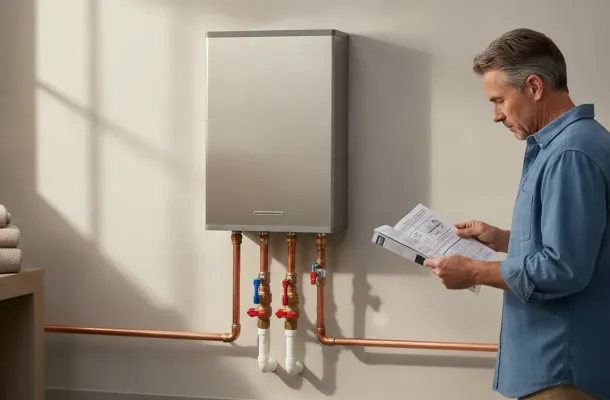
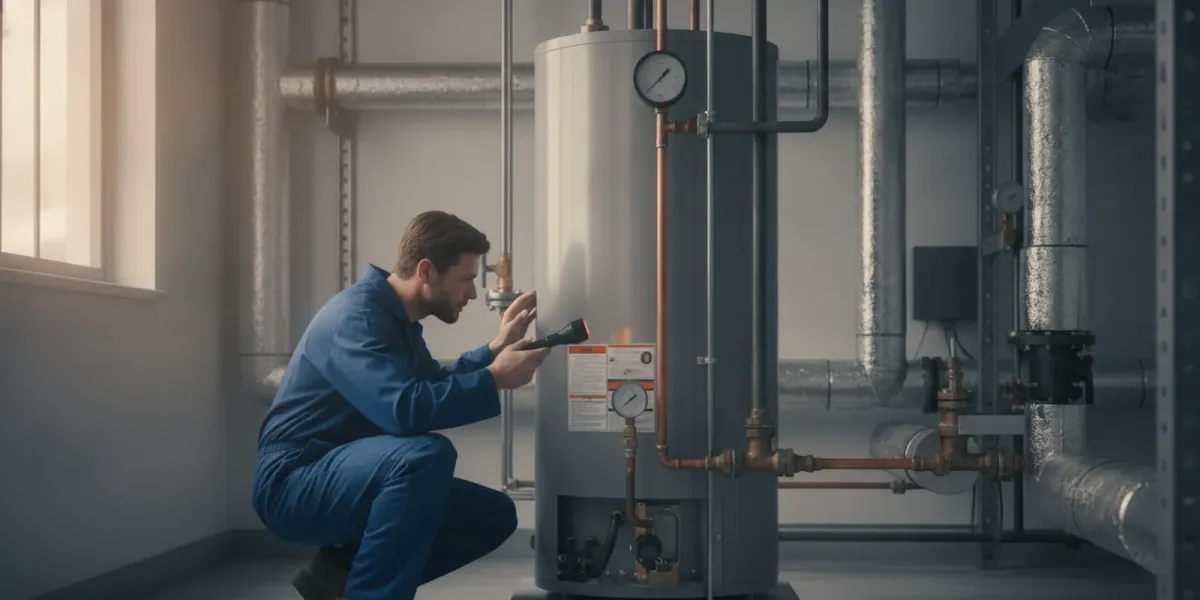
A commercial water heater assessment should match the equipment installed at the property. Systems may use storage tanks or tankless designs and may be fueled by gas or electricity. Capacity, controls, venting, connections, circulation, and the building’s usage pattern can all affect the next step. A residential troubleshooting tip should not automatically be applied to a commercial installation.
The evaluation may begin with the reported symptoms and the equipment label, then consider visible connections, controls, signs of leakage, and the way hot water is distributed through the property. The appropriate testing and repair depend on the specific system. Staff should ask the plumber to explain what was inspected and which finding supports the proposed work.
When calling, have the make and model available if it can be found safely. Also share the fuel type, approximate age if known, prior service records, the number of areas served, and whether the problem is complete or intermittent. If the property has multiple tenants or a building engineer, identify who can provide access and who can approve diagnostic work.
How should a business respond to a leak?
Do not assume that every drop near a heater has the same cause. Water may appear around a drain or condensate component on some systems, while water collecting at a tank, connection, or floor may indicate a plumbing or equipment concern. The location, amount, temperature, and timing are useful details for the service call.
Keep employees and customers away from hot water and wet floors. Protect nearby inventory or equipment only when doing so is safe and does not require contact with a hazardous area. Follow the property’s shutoff and emergency procedures if authorized staff know how to use them. Do not operate an unfamiliar gas or electrical control as a temporary fix. If water is increasing, reaching electrical equipment, or threatening the building, treat it as an urgent property-safety matter and communicate that clearly when requesting help.
When does repair make sense?
Repair may be appropriate when the cause is identifiable, the equipment is otherwise in serviceable condition, and the proposed work fits the system. A repair discussion should be based on the observed condition rather than on the symptom alone. For example, lukewarm water does not by itself establish that a tank must be replaced, just as a small visible leak does not by itself establish that a particular component is the source.
Ask for a plain explanation of:
- What the plumber inspected and what was found.
- Which issue is believed to be causing the reported symptom.
- What parts, labor, testing, or access work the repair includes.
- What operating limitations may remain while the work is completed.
- What staff should monitor after service.
The business should receive and approve a job-specific quote before work begins. Upfront pricing means the work and expected charge are explained before authorization; it does not mean every commercial water heater problem has the same price. The scope can depend on equipment, access, parts, code-related work, and the condition discovered at the property.
When should replacement be part of the conversation?
Replacement may deserve consideration when the heater has recurring problems, broader deterioration, a condition that cannot reasonably be corrected with a repair, or a repair scope that does not make practical sense for the property. Age can be relevant, but it is not a complete decision rule. A newer system can have a repairable fault, and an older system may still require a site-specific comparison.
Replacement planning should consider the property’s actual use. Ask whether the proposed equipment suits the number of fixtures, the pattern of demand, available fuel, installation space, connections, controls, and the business’s need to limit disruption. A unit that works for a small office may not be the right fit for a busy food-service operation, and a tankless option should not be selected without evaluating flow, controls, and installation requirements.
| Decision area | Questions for a repair | Questions for a replacement |
|---|---|---|
| Condition | Is there a specific fault that can be corrected? | Is there deterioration or repeated trouble beyond one repairable part? |
| Business impact | Can the proposed work address the current interruption? | Would a different system better fit demand and operating hours? |
| Installation | What access, shutdown, or testing is required? | What connections, venting, permits, and coordination may be required? |
| Approval | What parts and labor are included in the job quote? | What equipment and installation work are included, and what is separate? |
| After service | What should staff observe when hot water returns? | What commissioning and operating information will staff receive? |
New installations and replacements may require local permits or other approvals. Requirements vary by jurisdiction and job scope. For example, Garland, Texas, describes its own water-heater replacement permit process; that page is not a West Palm Beach rule. It illustrates why a business should confirm requirements for the property’s actual jurisdiction with the relevant authority and contractor before work starts. The U.S. Department of Energy also provides purchasing information for commercial gas water heaters, which can be useful background when comparing equipment, but it does not replace a site assessment: review the commercial gas water heater guidance.
How can a business prepare for the service visit?
Preparation is especially useful when the heater serves several rooms or tenants. Gather the equipment manual, model information, prior invoices, maintenance records, warranty documents from the manufacturer if available, and any photographs that were taken safely. Make the mechanical area accessible, but do not move heavy equipment or enter a restricted area to do so.
- Choose a staff contact who knows when the issue began and how the property uses hot water.
- List affected fixtures in order of operational importance.
- Record whether the problem occurs during a particular shift, cleaning period, or demand peak.
- Tell the plumber about leaks, odors, error displays, unusual sounds, or recent work.
- Confirm who can authorize diagnostic work and approve a job-specific quote.
- Plan how employees, customers, tenants, or guests will be kept away from a wet or restricted work area.
For food-service operators, identify tasks that depend on hot water and follow the business’s applicable health and workplace procedures while service is limited. Offices, schools, medical and dental offices, hospitality properties, warehouses, and retail businesses may have different operational needs. Do not bypass a safety control or make an unapproved gas, electrical, or plumbing change to keep production moving.
How can a West Palm Beach business arrange commercial plumbing help?
Hardenburgh Plumbing describes itself as a family-owned residential and commercial plumbing contractor serving Palm Beach County and South Florida. Its stated commercial scope includes water heater work along with other commercial plumbing services. Service availability can depend on the property, location, equipment, and requested work, so describe the site and operational impact rather than assuming every service is dispatched to every town at every hour.
To provide useful background before requesting an assessment, visit the commercial plumbing services page. You can also review the water heater installation and repair information. When you contact the company, share the symptoms, property type, affected fixtures, equipment details, and any access or shutdown constraints. A plumber can then evaluate the particular system and explain the recommended scope before work is authorized.
A commercial water heater problem may also occur alongside a separate plumbing concern. If staff report a leak elsewhere, recurring drain trouble, or a sewer issue, describe each symptom separately so the assessment does not treat unrelated problems as one diagnosis. Hardenburgh Plumbing also describes commercial backflow and grease-trap work, but the appropriate service depends on what is actually occurring at the property.
Call to discuss your commercial plumbing needs
Frequently asked questions
Can staff reset a commercial water heater?
Do not reset unfamiliar equipment or open its controls without the training and authorization appropriate for that system. Record any displayed code, keep people away from a hazard, and ask a qualified plumber what action is safe.
Does lukewarm water mean the heater must be replaced?
No. Lukewarm water is a symptom, not a diagnosis. The cause may involve the heater, controls, demand, or distribution, so the equipment and operating pattern should be evaluated before choosing repair or replacement.
Is commercial water heater repair the same as residential repair?
Not necessarily. Commercial equipment may serve more fixtures, different demand patterns, multiple tenants, and different operating requirements. The plumber should evaluate the system installed at the property rather than apply a residential assumption.
How quickly can the work be completed?
Timing depends on the fault, equipment, access, parts, approvals, and scope. Tell the plumber how the interruption affects the business, but do not assume a guaranteed arrival or completion time until the property and work are evaluated.
What information should I provide when calling?
Provide the property type, affected fixtures, start time, hot-water pattern, equipment make and model if available, fuel type, error code, leak information, recent service, and any operational deadline. Also identify who can provide access and approve a job-specific quote.
Careful observations help a plumber assess a commercial water heater while keeping staff away from unsafe adjustments. Arrange a site-specific evaluation, compare the explained options, and approve the work only after the scope and job quote are clear.